The post Understanding Steel Reinforcement Mesh Uses for Construction Projects appeared first on UK Construction Blog.
Have you ever wondered what keeps concrete from cracking under the weight of a multi-storey building or why your driveway doesn’t buckle after years of heavy traffic? The answer lies beneath the surface, literally. Steel reinforcement mesh, a grid of welded wires embedded in concrete, transforms a brittle material into a structure capable of withstanding tremendous loads and environmental stress. For architects and construction professionals, understanding this essential component isn’t just technical knowledge: it’s the foundation of designing safe, durable, and cost-effective projects.
Key Takeaways
- Steel reinforcement mesh transforms brittle concrete into a durable composite material by combining concrete’s compressive strength with steel’s tensile capacity.
- A-Series mesh suits general residential applications like slabs and driveways, whilst B-Series structural mesh is essential for heavy-load commercial and industrial construction projects.
- Proper installation of steel reinforcement mesh requires correct positioning at 30–50mm above the base, adequate concrete cover depth, and secure lapping of 200–400mm at joints.
- Steel reinforcement mesh controls crack formation and distributes loads evenly across structures, extending lifespan and reducing maintenance costs significantly.
- Selecting the right steel reinforcement mesh for construction projects depends on load requirements, soil conditions, environmental factors, and fire resistance ratings.
What Is Steel Reinforcement Mesh?
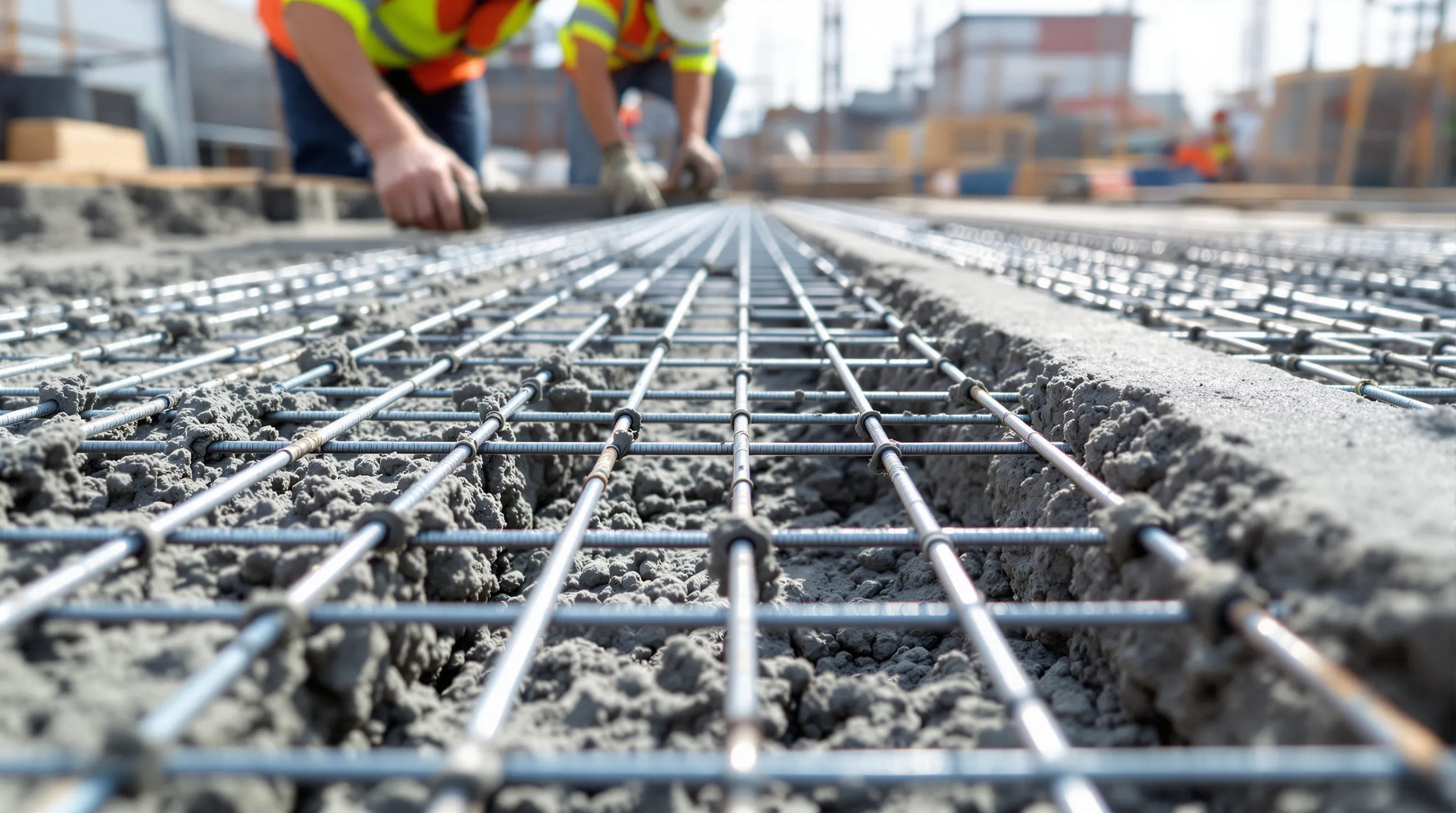
Steel reinforcement mesh is a grid made from steel wires that are woven and welded together at precise intervals. This mesh pattern creates a framework that, when placed within concrete, provides structural support and enhances the material’s performance.
The mesh itself consists of longitudinal and transverse wires, arranged perpendicular to each other, that are welded at every intersection. This configuration ensures the grid maintains its shape during concrete pouring and curing. The wire gauge, spacing, and overall dimensions vary depending on the intended application and load requirements.
Most reinforcement mesh is manufactured from high-tensile steel, which offers superior strength compared to mild steel alternatives. The material undergoes rigorous quality testing to meet industry standards, ensuring it can withstand the stresses imposed during construction and throughout the structure’s lifespan.
Why Steel Mesh Is Essential in Construction
Concrete possesses excellent compressive strength, it resists being crushed, but it’s weak under tension. When concrete experiences bending or stretching forces, it cracks. That’s where steel mesh becomes indispensable.
By embedding steel mesh within concrete, you’re combining two materials with complementary properties. Concrete handles compression whilst steel manages tension. This partnership creates a composite material far stronger than either component alone.
Steel mesh also distributes loads evenly across a structure. Instead of stress concentrating in one area (which causes cracking), the mesh spreads forces throughout the concrete slab or wall. This load distribution is particularly important in slabs that support heavy machinery, vehicle traffic, or multi-level buildings.
Also, reinforcement mesh controls crack formation. Whilst it doesn’t prevent all cracks, concrete will shrink as it cures, the mesh keeps cracks narrow and prevents them from widening or propagating. This crack control extends the structure’s lifespan and reduces maintenance costs.
How Reinforcement Mesh Works in Concrete
The science behind steel mesh reinforcement centres on bond strength. When concrete is poured over the mesh, it flows around the wires and fills every gap. As the concrete cures, it forms a mechanical bond with the steel surface.
When tensile forces act on the concrete, say, from a load applied to a slab, the concrete begins to crack. But here’s the key: the steel mesh bridges these cracks. The tensile forces transfer from the concrete to the steel wires, which can handle much higher tension loads.
Think of it like a safety net. The concrete might crack, but the steel mesh catches the load and prevents the structure from failing. The wires distribute the stress, limiting crack width and maintaining structural integrity.
This interaction also protects the steel itself. The concrete cover around the mesh shields the steel from moisture, oxygen, and chemicals that cause corrosion. As long as the concrete remains intact and the mesh maintains adequate cover depth, the reinforcement stays protected for decades.
Temperature changes and shrinkage create internal stresses in concrete. Without reinforcement, these stresses cause random cracking. Steel mesh restrains this movement, controlling where and how cracks form. The result is a more predictable, stable structure that performs reliably under various conditions.
Types of Steel Reinforcement Mesh
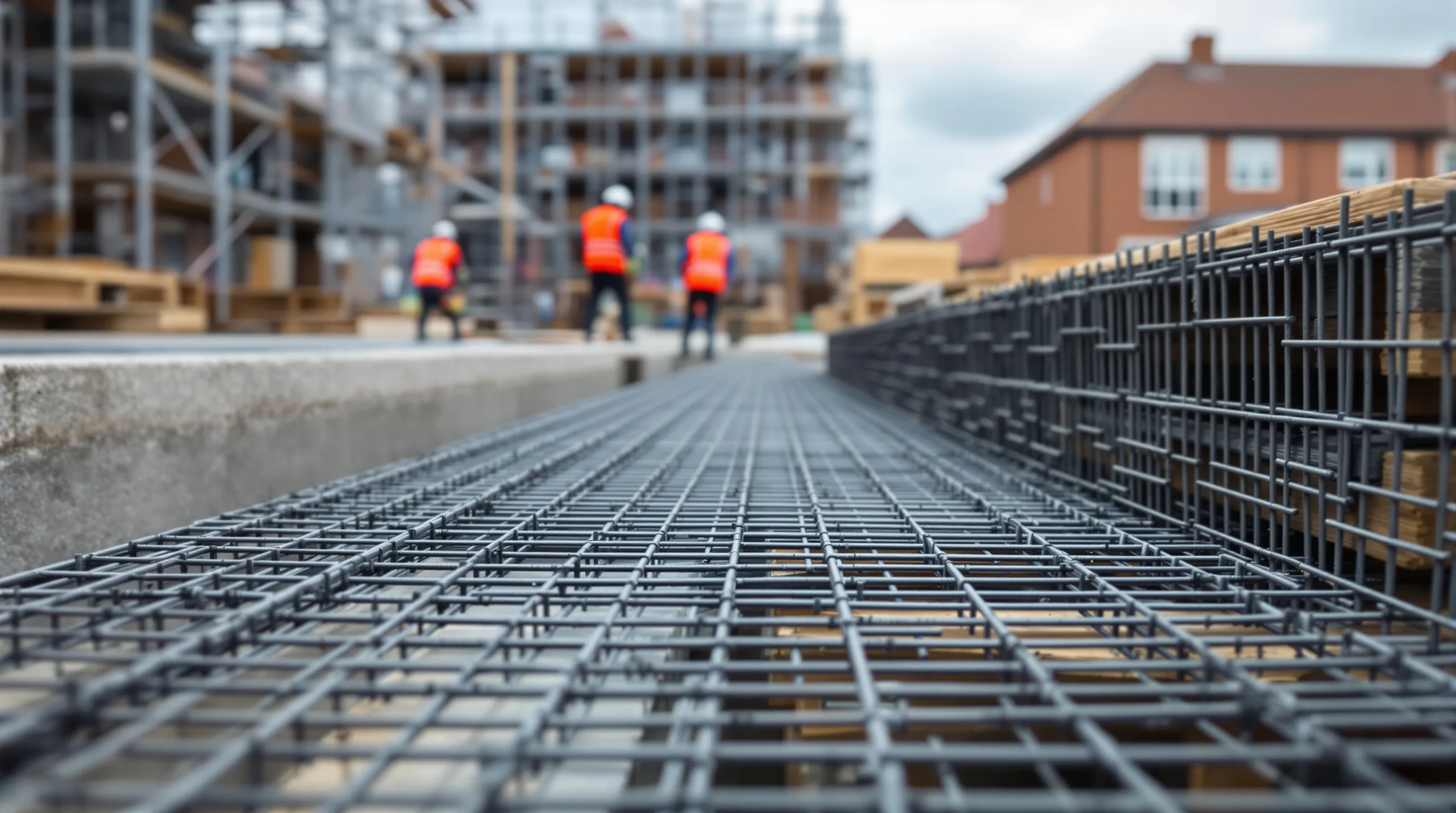
Not all steel mesh is created equal. The construction industry uses several mesh types, each engineered for specific applications and load conditions. Understanding these variations helps you select the right product for your project.
Standard Mesh Sheets (A-Series)
A-Series mesh, often called standard or square mesh, features uniform wire spacing in both directions. Common configurations include 200mm × 200mm grids with wire diameters ranging from 6mm to 10mm.
This mesh type suits general construction applications where moderate strength is sufficient. You’ll find A-Series mesh in residential slabs, garage floors, shed footings, and light-duty pathways. It’s the workhorse of domestic construction, reliable, readily available, and cost-effective.
The manufacturing process for A-Series mesh follows strict Australian and international standards. Each sheet undergoes quality checks to verify wire diameter, spacing accuracy, and weld strength. Most suppliers stock standard sheet sizes (typically 6m × 2.4m), though custom dimensions can be ordered.
One advantage of A-Series mesh is its predictable performance. Engineers can calculate load capacity with confidence, knowing the mesh will behave as specified. This reliability makes it ideal for projects where you need consistent quality without paying for unnecessary strength.
Structural Mesh Sheets (B-Series)
B-Series mesh, also known as high-yield or structural mesh, uses thicker wires made from higher-grade steel. The material’s enhanced tensile strength allows it to handle heavier loads whilst using less steel overall, sometimes reducing weight by 25% compared to standard mesh.
This mesh type is essential for commercial and industrial projects. Warehouses, factories, shopping centres, and multi-storey buildings all rely on B-Series mesh to support heavy loads and meet stringent engineering requirements.
The cost difference between A-Series and B-Series mesh isn’t as significant as you might expect. Yes, the material itself costs more per sheet, but you often need fewer sheets or thinner slabs to achieve the same strength. Labour savings and reduced concrete volume can offset the higher mesh price.
B-Series mesh also offers better crack control under heavy loads. The higher-grade steel maintains its integrity even when concrete experiences significant stress. This performance is critical in structures subject to dynamic loads, think forklift traffic in warehouses or vibration from industrial machinery.
Specialist Mesh Types
Beyond standard and structural mesh, several specialist variants serve niche applications.
Flexible mesh features lighter wire gauges and wider spacing, allowing it to bend around curves. You’ll use this in curved walls, swimming pools, and architectural features where rigid sheets won’t conform to the design. Even though its flexibility, this mesh still provides adequate reinforcement for its intended applications.
Corrosion-resistant mesh uses galvanised or stainless steel wires. Coastal construction, water treatment facilities, and chemical plants benefit from this enhanced protection. The initial cost is higher, but the extended lifespan and reduced maintenance make it economical over time.
Seismic mesh incorporates specific wire patterns and ductility characteristics designed to absorb earthquake forces. Buildings in seismically active regions require this specialised reinforcement to meet building codes and ensure occupant safety.
Some manufacturers offer trench mesh, narrow strips designed specifically for footings and trenches. The smaller dimensions reduce waste and make handling easier in confined spaces.
Fibre-reinforced mesh represents an emerging technology. Synthetic or glass fibres are woven with steel wires, creating a hybrid product that resists both tension and impact. Whilst not yet mainstream, this technology shows promise for specific applications.
Common Applications and Uses
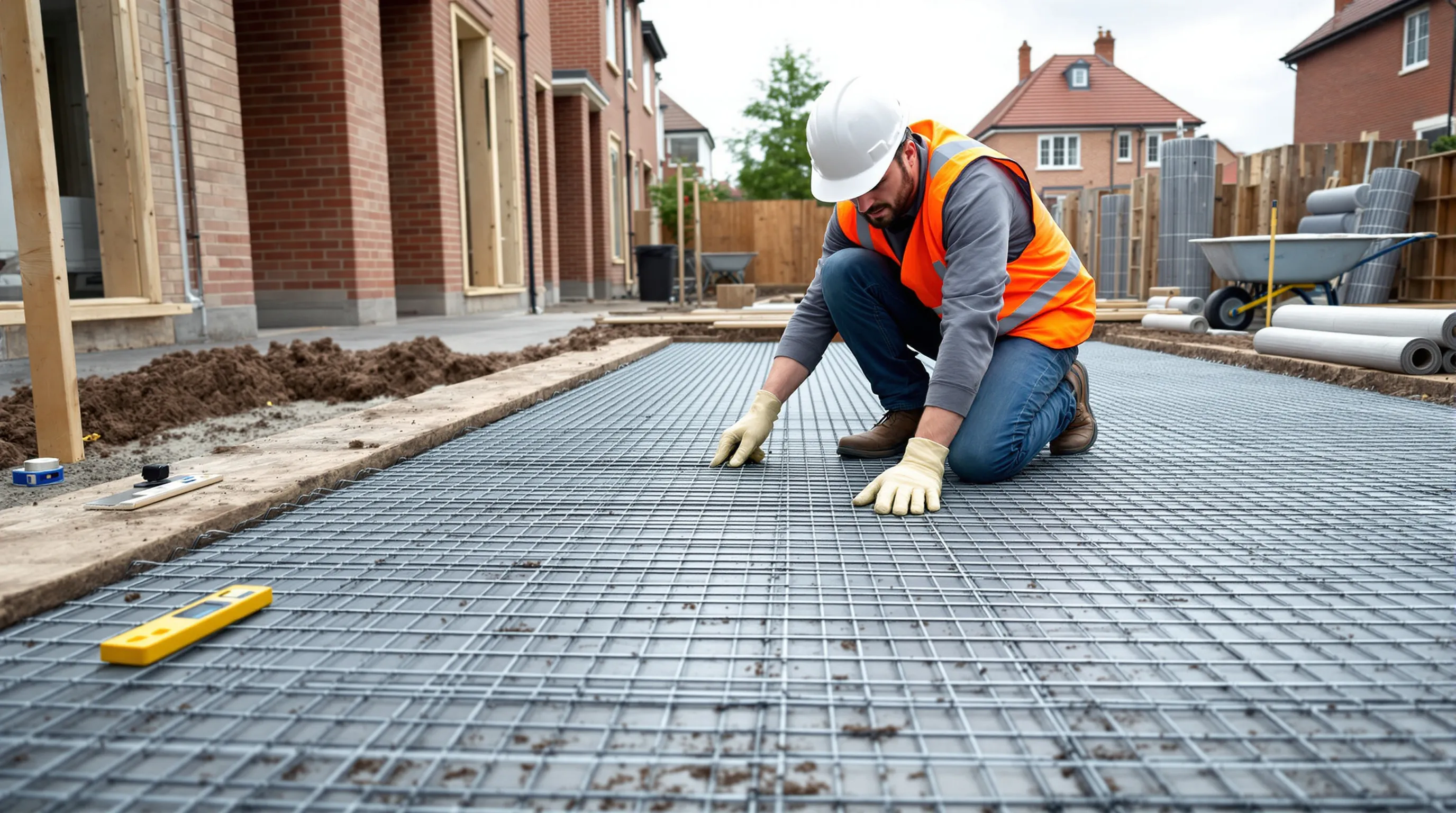
Steel reinforcement mesh appears in nearly every concrete structure you encounter. Its versatility makes it suitable for projects ranging from small domestic jobs to massive infrastructure developments.
Domestic Construction Projects
In residential construction, reinforcement mesh is standard in concrete slabs. Whether you’re building a house, granny flat, or garage, the slab likely contains mesh reinforcement. This application prevents cracking from soil movement, temperature changes, and the weight of the building itself.
Driveways and pathways also benefit from mesh reinforcement. Vehicle traffic creates repeated loading cycles that stress concrete. Mesh prevents these stresses from causing cracks that would compromise the surface and require costly repairs.
Swimming pools rely on reinforcement mesh to handle water pressure and ground movement. The mesh helps the shell maintain its shape and prevents cracks that could lead to leaks. Pool installers typically use flexible or corrosion-resistant variants for this application.
Footings and foundation walls incorporate mesh to distribute loads from the building above. The mesh ties together separate concrete pours and provides continuity across construction joints. This integration is particularly important in expansive soils where movement is expected.
Retaining walls use mesh to resist soil pressure pushing against the back of the wall. Without reinforcement, the wall might crack or even fail catastrophically. Mesh distributes these lateral forces, keeping the wall stable and functional.
Commercial and Industrial Applications
Commercial construction demands higher-performance reinforcement. Warehouse slabs supporting heavy racking systems, manufacturing floors with point loads from machinery, and retail spaces with high foot traffic all require structural-grade mesh.
Road and pavement construction increasingly uses mesh reinforcement. Whilst not universal, many jurisdictions now specify mesh in concrete roads to extend pavement life and reduce maintenance. The mesh controls cracking from traffic loads and thermal expansion.
Bridge decks incorporate multiple layers of reinforcement mesh. The top layer resists negative bending moments whilst the bottom layer handles positive moments. This dual reinforcement ensures the deck can support vehicle loads safely for decades.
Commercial carparks, especially multi-level structures, rely on mesh to handle repeated vehicle loading and potential impact forces. The mesh also helps with fire resistance, maintaining structural integrity even if the concrete surface spalls during a fire.
Industrial facilities use mesh in containment areas, loading bays, and process floors. These environments often involve chemical exposure, thermal cycling, and heavy equipment, all conditions where reinforcement mesh proves essential.
Pavement overlays and repair work often incorporate mesh to bond new concrete to existing surfaces. The mesh prevents delamination and extends the overlay’s service life.
Key Benefits of Using Reinforcement Mesh
The widespread adoption of steel reinforcement mesh stems from its practical advantages. These benefits translate directly into better project outcomes and long-term value.
Strength enhancement tops the list. Mesh increases concrete’s load-carrying capacity substantially, often doubling or tripling its effective strength. This enhancement allows you to design thinner slabs and lighter structures, saving material costs without compromising safety.
Crack control extends structure lifespan. Whilst mesh doesn’t prevent all cracking, it keeps cracks tight and prevents them from propagating. Narrow, controlled cracks don’t compromise structural integrity or allow water penetration that causes deterioration.
Corrosion resistance, when properly installed with adequate cover, protects the steel for decades. The concrete’s alkaline environment actually enhances the steel’s durability by forming a passive layer on the wire surface. As long as moisture and chlorides don’t reach the steel, corrosion remains minimal.
Installation speed cuts project timelines. Pre-fabricated mesh sheets require minimal on-site labour. Workers simply position the sheets, secure them with ties or chairs, and proceed with concrete pouring. This efficiency is particularly valuable in large projects where time equals money.
Cost savings come from multiple sources. Less waste compared to loose reinforcing bars, reduced labour costs, faster construction, and lower maintenance expenses all contribute to improved project economics. Many contractors find that mesh pays for itself through these efficiencies.
Load distribution creates more reliable structures. Instead of isolated weak points, mesh-reinforced concrete distributes stresses evenly. This distribution improves performance under both static and dynamic loads.
Quality consistency comes from factory manufacturing. Unlike site-bent reinforcing bars, mesh arrives with precise dimensions and verified material properties. This consistency reduces the risk of installation errors and ensures the structure performs as designed.
Durability in harsh environments justifies mesh use in challenging conditions. Coastal areas, industrial zones, and regions with freeze-thaw cycles all benefit from properly specified reinforcement mesh.
The combination of these benefits explains why steel reinforcement mesh has become the default choice for most concrete construction. It’s not just about meeting code requirements, it’s about building structures that perform reliably throughout their design life.
Choosing the Right Mesh for Your Project

Selecting appropriate reinforcement mesh requires understanding your project’s specific demands. The wrong choice can lead to over-engineering (wasting money) or under-specification (risking structural failure).
Load Requirements and Specifications
Start by identifying the loads your structure will carry. Residential slabs with typical furniture and occupancy loads differ dramatically from warehouse floors supporting forklifts and pallet racking.
Your structural engineer will calculate these loads and specify the required reinforcement. This specification typically includes wire diameter, mesh spacing, and steel grade. Don’t deviate from these specifications without consulting the engineer, they’re based on safety factors and code requirements.
For heavy-load applications, B-Series structural mesh is usually necessary. The high-yield steel provides adequate strength without excessive material use. Standard A-Series mesh suits light to moderate loads where the additional strength isn’t justified.
Soil conditions influence mesh selection too. Expansive or reactive soils impose additional stresses on slabs and foundations. Your engineer might specify heavier mesh or closer spacing to accommodate these movements.
Environmental factors also matter. Coastal construction within the salt spray zone requires corrosion-resistant mesh, either galvanised or stainless steel. Industrial facilities with chemical exposure need similar protection.
Fire resistance ratings can dictate mesh choice in commercial buildings. Certain mesh specifications provide better performance during fire events, maintaining structural integrity longer than alternatives.
Mesh Sizes and Dimensions
Standard mesh sheets measure 6 metres by 2.4 metres, though other sizes are available. These dimensions suit most construction projects and minimise cutting waste. For large slabs, full sheets reduce the number of joints and speed installation.
Wire spacing typically ranges from 100mm to 300mm in both directions. Closer spacing provides more reinforcement but increases cost. Common configurations include 200mm × 200mm for general use and 100mm × 100mm for higher-strength applications.
Wire diameter varies from 5mm to 12mm, with thicker wires providing greater strength. The diameter you choose depends on load requirements and the spacing between wires. Engineers balance these factors to achieve the required strength economically.
Rolls of mesh suit projects with irregular shapes or where transporting full sheets is impractical. Trench mesh in narrow widths (300mm to 600mm) fits footings and beams without wasteful cutting.
Custom sizes and configurations are available for special applications, though they typically cost more and require longer lead times. Most projects work well with standard products, but don’t hesitate to specify custom mesh when your project demands it.
Consider handling and safety when selecting dimensions. Larger sheets cover more area but require more workers or mechanical lifting. Smaller sections are easier to manoeuvre but create more joints.
Installation Best Practices
Proper installation determines whether your reinforcement mesh performs as designed. Even the best-specified mesh fails to deliver if installed incorrectly.
Spacing and Positioning
Mesh must sit at the correct depth within the concrete section. Too close to the surface and the steel corrodes: too deep and it doesn’t provide adequate tensile reinforcement.
For slabs, position the mesh in the lower third of the section, typically 30mm to 50mm above the base. This placement allows the mesh to handle tensile stresses that develop when the slab bends under load. Use chairs or spacers to elevate the mesh to the specified height.
Cover depth, the concrete between the mesh and the surface, protects the steel from corrosion. Building codes specify minimum cover based on exposure conditions. Outdoor slabs need more cover than indoor floors: coastal environments require even greater protection.
Check cover depth before pouring concrete. A simple cover meter or physical measurement confirms the mesh sits at the right level. Don’t rely on eyeballing it, a few millimetres difference can affect long-term durability.
When installing multiple sheets, maintain consistent elevation across the entire pour. Variations create weak spots where the concrete doesn’t perform uniformly. Take time to verify alignment before pouring begins.
Edge distance matters too. Mesh should stop at least 50mm from slab edges to ensure adequate cover on all sides. Cutting mesh to fit properly prevents exposed wires that rust and stain the concrete.
Lapping and Joining Techniques
Mesh sheets must overlap (lap) at joints to maintain continuity of reinforcement. The lap length depends on wire diameter and load conditions, typically one or two mesh squares (200mm to 400mm).
For high-load applications, engineers often specify longer laps or additional ties at joints. These enhanced connections ensure forces transfer smoothly from one sheet to the next without creating weak points.
Position laps perpendicular to the direction of major loads when possible. This orientation ensures reinforcement crosses the tension zone effectively. In slabs with loads in multiple directions, stagger the laps in adjacent rows.
Secure lapped joints with tie wire to prevent the mesh from shifting during concrete placement. Loose mesh that moves as concrete flows can end up at the wrong depth or with inadequate lap, compromising structural performance.
Avoid lapping all joints in a straight line, stagger them by at least 500mm. This pattern distributes the joints across the slab rather than creating a potential line of weakness.
In heavily loaded areas like column positions or point loads, consider doubling the mesh rather than relying solely on standard lapping. The additional reinforcement provides extra security where stresses concentrate.
Essential Accessories for Mesh Installation
Reinforcement mesh doesn’t work alone, several accessories ensure proper installation and performance.
Bar chairs or mesh chairs elevate the reinforcement to the specified height. These plastic or steel supports come in various heights to suit different slab thicknesses and cover requirements. Space chairs at 1-metre intervals across the slab to prevent sagging.
Plastic chairs resist corrosion and don’t create rust stains on the concrete surface. Steel chairs handle heavier mesh but need protective caps to prevent rusting through the concrete cover.
Spacers serve a similar purpose to chairs but attach to formwork sides, maintaining edge distance. They’re particularly important for walls and vertical reinforcement where gravity won’t hold the mesh in position.
Tie wire secures mesh sheets together at laps and fixes them to chairs. Galvanised or stainless steel tie wire resists corrosion better than bare steel. The wire should be tight enough to prevent movement but not so tight that it deforms the mesh.
Rebar supports or bolsters create a flat, stable base for the mesh to rest on. They’re especially useful on uneven ground or over soft substrates where chairs might sink.
Cover meters verify the mesh sits at the correct depth after installation but before concrete pouring. This electronic tool takes the guesswork out of quality control.
Mesh cutters or bolt cutters trim sheets to fit around obstacles or at edges. Clean cuts prevent sharp wire ends that pose safety hazards or rust problems.
Safety equipment shouldn’t be overlooked. Reinforcement mesh has sharp edges and exposed wire ends. Workers need cut-resistant gloves, safety boots, and eye protection when handling and cutting mesh.
Some contractors use lifting equipment for large sheets. Vacuum lifters or crane attachments move heavy mesh safely, reducing worker injury risk and speeding installation.
Proper use of these accessories doesn’t just ensure code compliance, it makes installation faster, safer, and more reliable. The modest cost of quality accessories pays dividends in improved outcomes.
Conclusion
Steel reinforcement mesh has earned its place as a fundamental component in modern construction. Its ability to transform brittle concrete into a durable, load-bearing material makes it indispensable for projects of all scales.
You’ve seen how the mesh works, bonding with concrete to handle tensile forces the concrete alone cannot manage. You understand the different types available, from standard A-Series for residential work to high-strength B-Series for demanding commercial applications. The specialist variants address specific challenges like corrosion, flexibility, or seismic activity.
The applications span the entire construction industry. Domestic slabs, driveways, and pools rely on mesh just as commercial warehouses, industrial floors, and infrastructure projects do. The benefits, strength, crack control, durability, and cost efficiency, explain why mesh has become the default reinforcement choice.
Choosing the right mesh means matching specifications to load requirements and environmental conditions. Installation quality determines whether the mesh delivers its designed performance, making proper positioning, lapping, and use of accessories critical.
As you plan your next project, remember that reinforcement mesh isn’t just a code requirement, it’s an investment in structural integrity and long-term performance. Specify it correctly, install it properly, and you’ll create concrete structures that serve reliably for decades. The hidden grid beneath the surface might not be visible in the finished work, but its influence on quality and longevity is undeniable.
Frequently Asked Questions
What is steel reinforcement mesh used for in construction projects?
Steel reinforcement mesh is embedded in concrete to provide structural support by managing tensile forces. It prevents cracking, distributes loads evenly, and transforms brittle concrete into a durable composite material capable of withstanding heavy loads in slabs, foundations, and walls.
How does steel mesh prevent concrete from cracking?
Steel mesh controls crack formation by bridging cracks and distributing tensile stresses throughout the concrete structure. Whilst it doesn’t prevent all cracks, it keeps them narrow and prevents propagation, maintaining structural integrity and extending the lifespan of the construction.
What is the difference between A-Series and B-Series reinforcement mesh?
A-Series mesh features uniform wire spacing suitable for residential and light-duty applications like garage floors and pathways. B-Series structural mesh uses thicker, higher-grade steel wires for heavy-load commercial and industrial projects, offering 25% less weight whilst providing superior strength.
How far should steel reinforcement mesh be positioned from the concrete surface?
Steel mesh should typically sit 30mm to 50mm above the base in the lower third of concrete slabs. Adequate cover depth protects the steel from corrosion whilst ensuring proper tensile reinforcement. Edge distance should be at least 50mm to prevent exposed wires.
Can steel reinforcement mesh be used in coastal construction?
Yes, but coastal environments require corrosion-resistant mesh made from galvanised or stainless steel. The salt spray zone demands enhanced protection with greater concrete cover depth to prevent moisture and chlorides from reaching the steel and causing premature corrosion.
What accessories are needed to install steel reinforcement mesh properly?
Essential accessories include bar chairs or mesh chairs to elevate the mesh to the correct height, tie wire to secure lap joints, spacers for edge distance, and cutting tools. These accessories ensure proper positioning, prevent movement during concrete pouring, and maintain structural performance.